Undergrounding power on the North Shore: costs, trees, heritage and what to expect
Why so many North Shore owners put their supply underground, how it's done around trees, gardens and heritage homes, and what drives the cost.
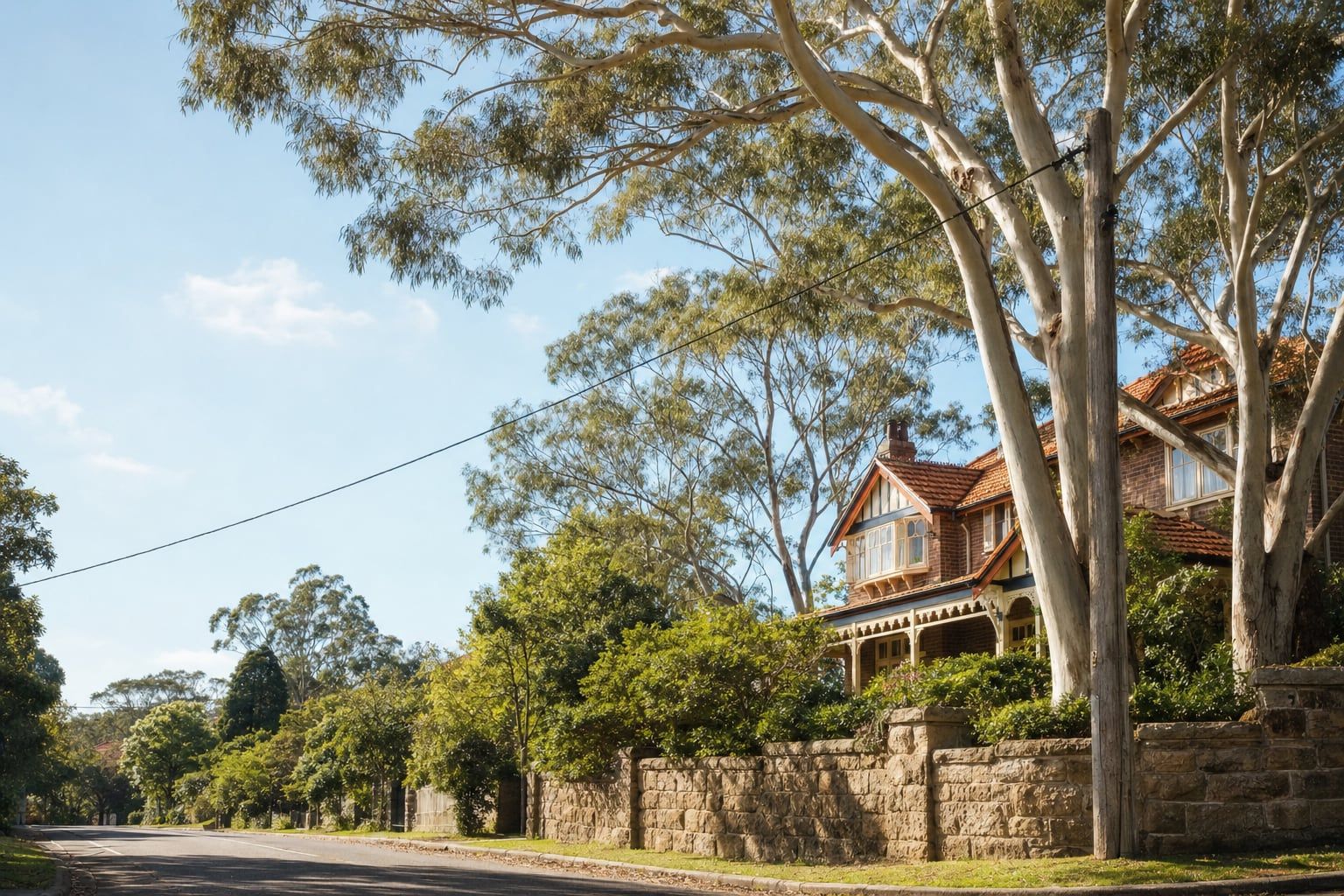
Ask North Shore homeowners what they’d change about their street and plenty will say the power lines. Overhead lines thread through the canopy of blue gums and turpentines, sag across front gardens and hang off the facades of Federation homes. After every big storm, some come down. Putting your own supply underground is one of the most popular Level 2 jobs on the North Shore, and this guide explains how it works.
What undergrounding actually changes
Your supply has two parts that matter here:
- The service line from Ausgrid’s street pole or pit to your connection point.
- Any private overhead line on your property, for example from a private pole to the house.
Undergrounding replaces those with a cable in conduit under the ground, from the street to your meter board. The street mains on the poles stay where they are. Street-wide undergrounding is a separate, much larger undertaking.
Why owners do it
- Storm damage. Tall trees drop limbs on service lines. An underground supply isn’t exposed.
- Heritage presentation. Removing the line and bracket restores a period facade.
- Renovations. Second storeys, attic dormers, pavilions and pools stop clashing with the line.
- Private poles. Long and battle-axe blocks lose their private pole and line.
- Bushfire edges. Homes near Ku-ring-gai bushland remove an overhead private line from fire risk.
- Capacity. It’s the moment to lay a cable big enough for three phase.
How the connection works on the North Shore
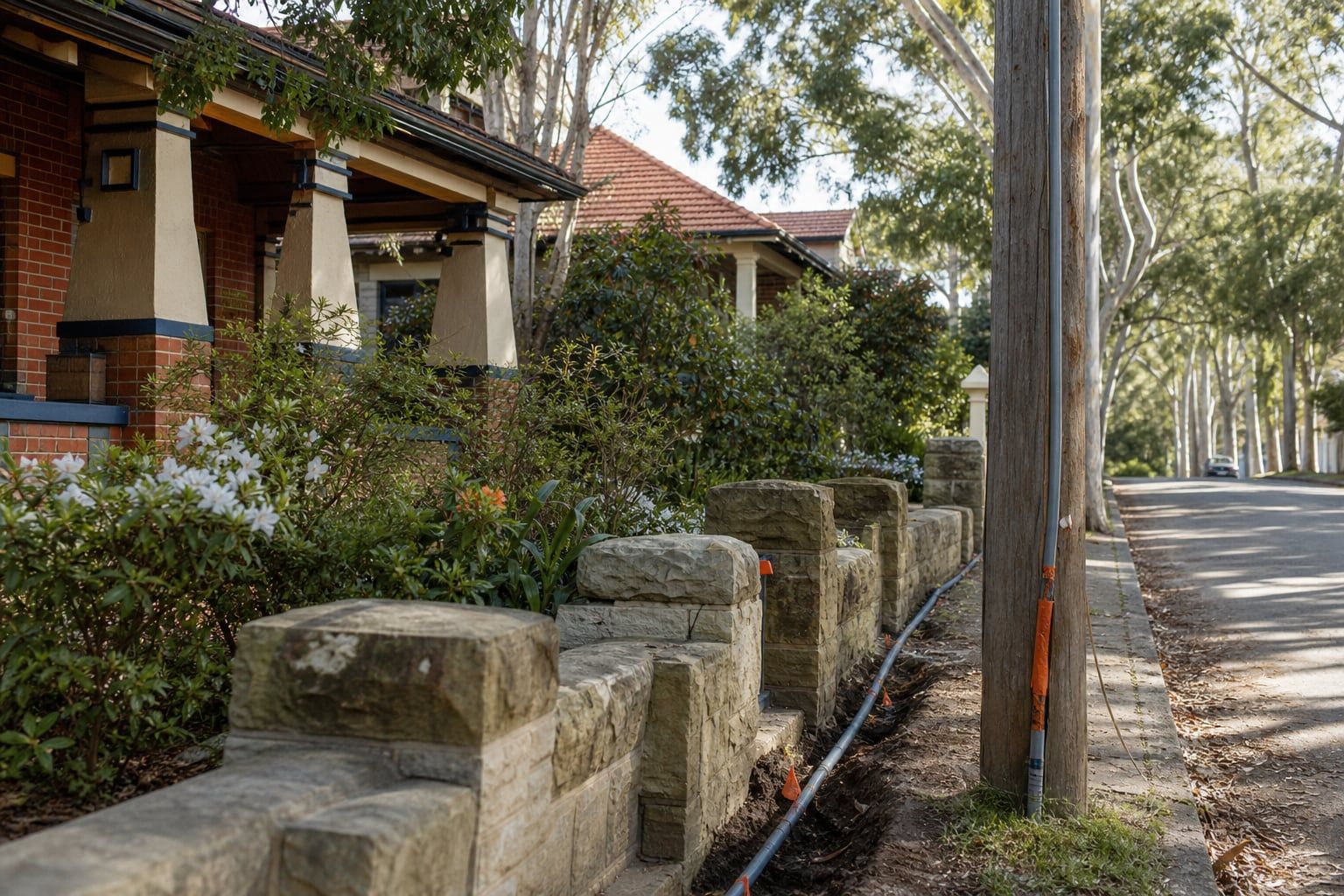
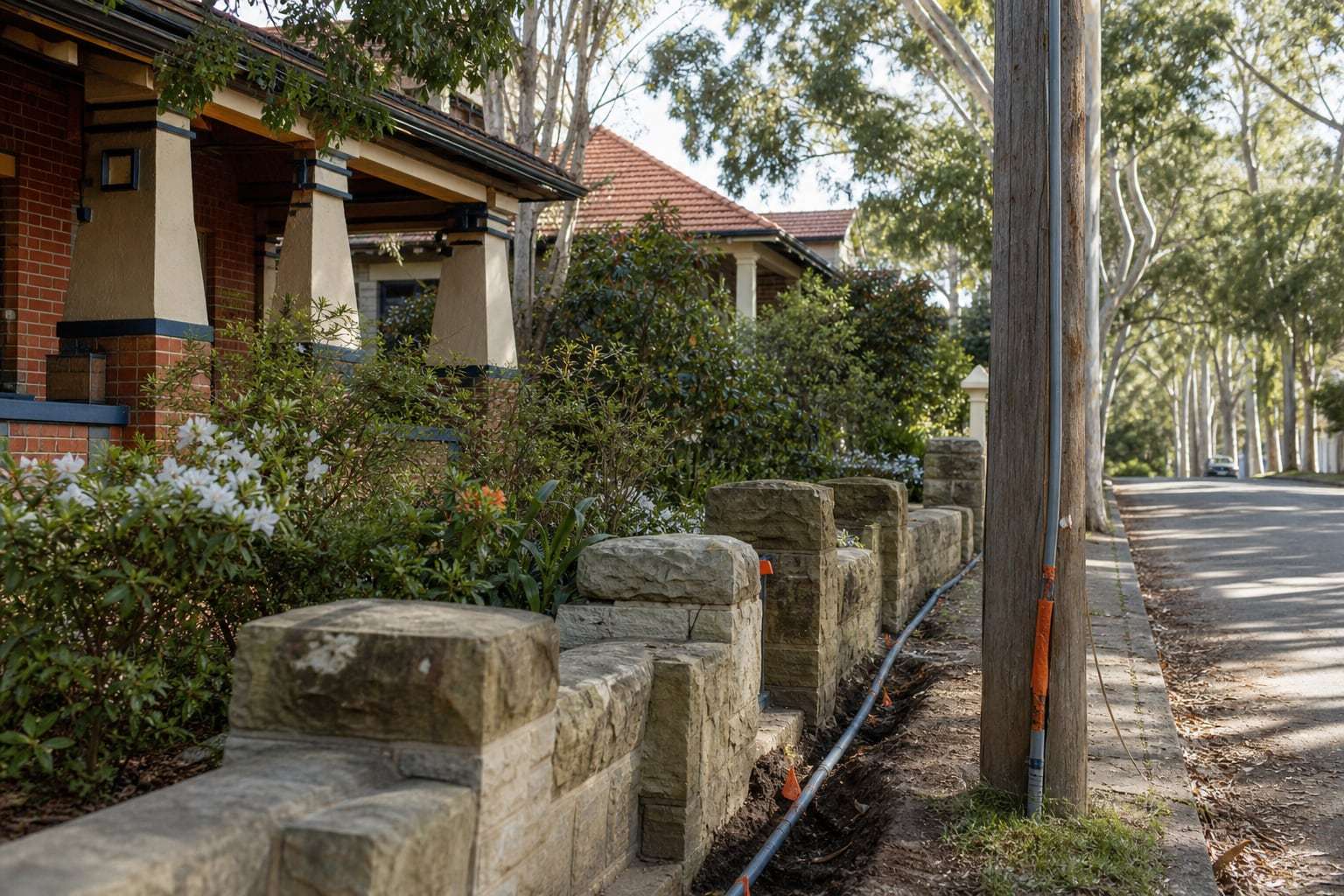
Most North Shore streets are supplied by overhead Ausgrid mains. The usual method is an underground supply from an overhead system: the new cable runs from your meter board, underground to the base of the nearest suitable pole, then up the pole inside a protective conduit to connect to the mains. In some streets and newer developments, the mains are underground and the connection is at a pit. We confirm the method and Ausgrid’s requirements before quoting.
Trees and roots
North Shore gardens are full of significant trees, and many are protected. The trench route matters:
- We plan around trees, keeping clear of trunks and major roots
- Near roots, we hand dig rather than use machinery
- For protected trees, we can work with your arborist on the route and method
- Where a route through roots is unavoidable, boring under them may be an option
Sandstone and slopes
Sandstone sits near the surface on many North Shore ridges, and blocks often slope with retaining walls and stairs. Rock means saw-cutting or breaking, which takes longer and costs more. We look for a route that avoids the worst of it.
Heritage homes
Removing an overhead line almost always improves a heritage home’s presentation. Where the new cable rises to the meter board, we keep conduit discreet, run it in the least visible spot and paint it to match. If the meter board itself is on the facade, we can discuss relocating it.
What drives the cost
- Trench length from the street to the meter board
- Ground: soil, sandstone, roots
- Surfaces: lawn, garden beds, paving, driveways, walls
- Connection: up a street pole or at a pit
- Cable size: single or three phase
- Private poles to remove
- Ausgrid requirements for your street
We give a fixed written price after a site visit.
The process
- Site visit and route planning
- Confirming the connection method with Ausgrid
- Trenching and conduit, often over one or two days
- Garden and surfaces restored
- Connection day: notification lodged, supply isolated, cable connected and tested, power restored
- Old line, bracket and any private poles removed
- Certificate of compliance
Timing it with other work
The best time is when the garden is already being disturbed: landscaping, a new driveway, a pool or a rebuild. If you’re also going all-electric, lay a cable sized for a three phase power upgrade at the same time.
Is it right for you?
Undergrounding suits most North Shore homes where the line runs through trees, crosses a valued garden, spoils a period facade or gets in the way of renovations. If your line is short, clear and out of the way, you may not need it.
After the work
We restore lawns, beds and paving disturbed by the trench as part of the job, and give you a sketch of where the new cable runs so future landscapers know where not to dig.
Neighbours
If the trench runs along a shared driveway or boundary, let your neighbours know before work starts.
Talk to us
Call the North Shore level 2 electrician team for a site visit. Our overhead to underground conversion page covers the work in more detail, and our guide to a heritage home power upgrade covers upgrading the supply inside the house.
Updated
Undergrounding power on the North Shore: common questions
Something else on your mind? Call 02 9158 9919 and ask.
Does undergrounding my service put the whole street underground?
No. It replaces your own service line and any private overhead line. The street mains stay as they are unless the network or council undertakes a separate street undergrounding project.
Do we need council approval?
Usually not for the supply itself, but work near protected trees, or visible changes on a heritage-listed home, may need checking. We'll flag anything that might.
Can we do it in stages?
Yes. The trench and conduit can go in during landscaping, with the cable and connection done later.