Heritage home power upgrade on the North Shore: modern supply, original character
How to bring the supply of a Federation, Arts and Crafts or heritage-listed North Shore home up to modern standards without spoiling its character.
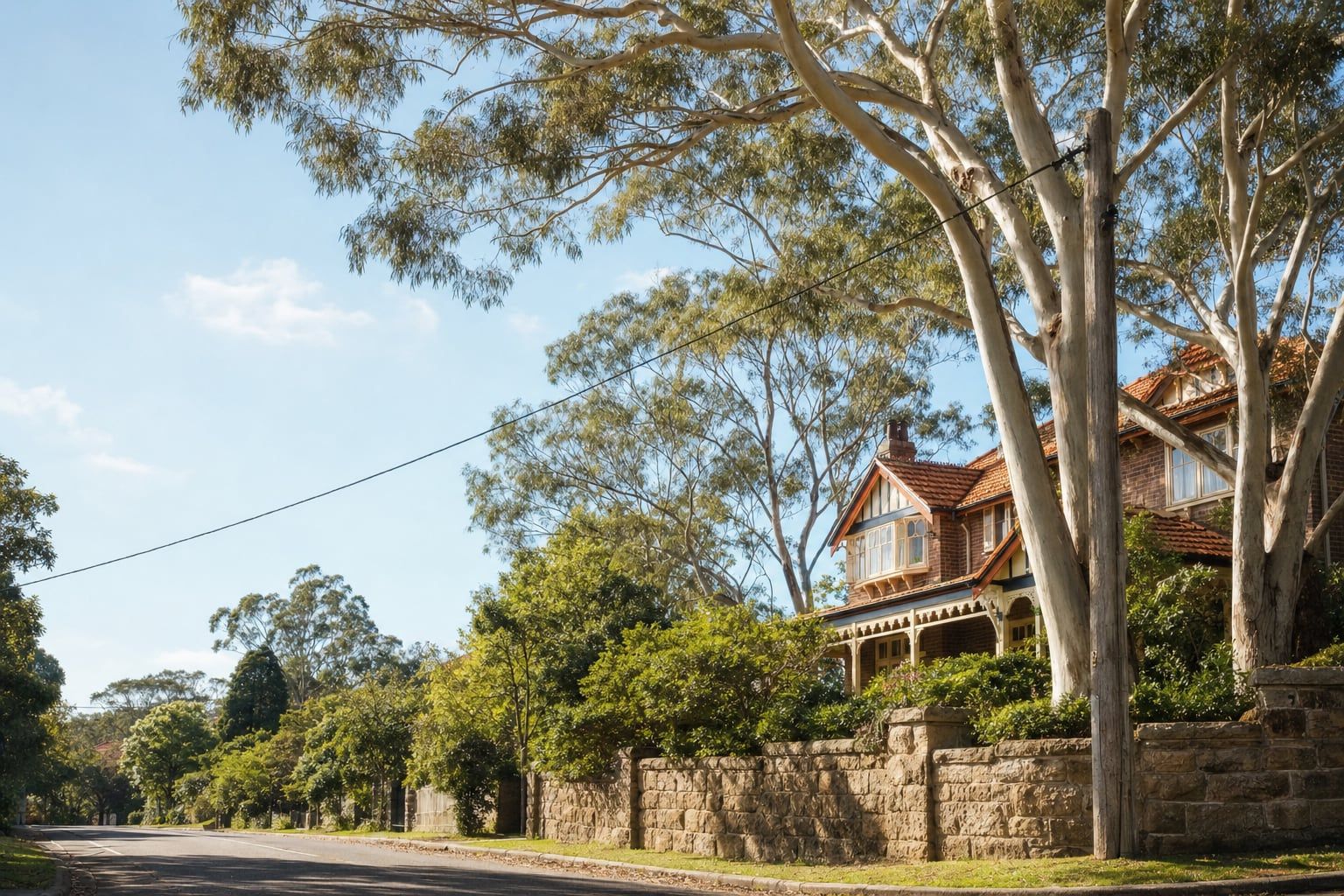
The North Shore has one of Sydney’s richest collections of period homes: Federation Queen Anne houses in Lindfield and Killara, Arts and Crafts bungalows in Roseville and Chatswood, Inter-war homes in Willoughby and Turramurra, and Victorian terraces on the Lower North Shore. Many sit in heritage conservation areas or are individually listed. Their owners want modern comfort: heat pumps, induction cooking, an EV in the garage. The electricity supply has to catch up without spoiling the house. This guide explains how.
The typical heritage home supply
Most period homes were built before mains power reached the street, or connected in its early years. The supply was added later, often in a hurry:
- A bracket or raiser fixed into soft brick, lime mortar or old timber
- Consumer mains in rubber or early insulated cable, sometimes through the roof space and down an internal wall
- A meter board on the front verandah or in the entry hall
- Mains sized for a few lights and a fridge
Decades later, many still have that original supply, with insulation that has cracked and terminations that have loosened.
Signs your heritage home needs an upgrade
- Old, cloth-like or cracked cable visible at the meter board
- Lights dim when the heating, oven or dryer starts
- A warm meter board or a hot smell
- A bracket pulling away from soft brick
- An installer says the supply can’t take a heat pump, induction or EV charger
Principles for a sympathetic upgrade
Keep the street face original. Wherever possible, keep new conduit, brackets and boards off the street facade and the main verandah.
Use secondary routes. Roof spaces, sub-floors, side and rear walls and service areas are better than original rooms and facades.
Fix into sound fabric. Fittings must be fixed into structure that can carry the load, without damaging original brick or stone.
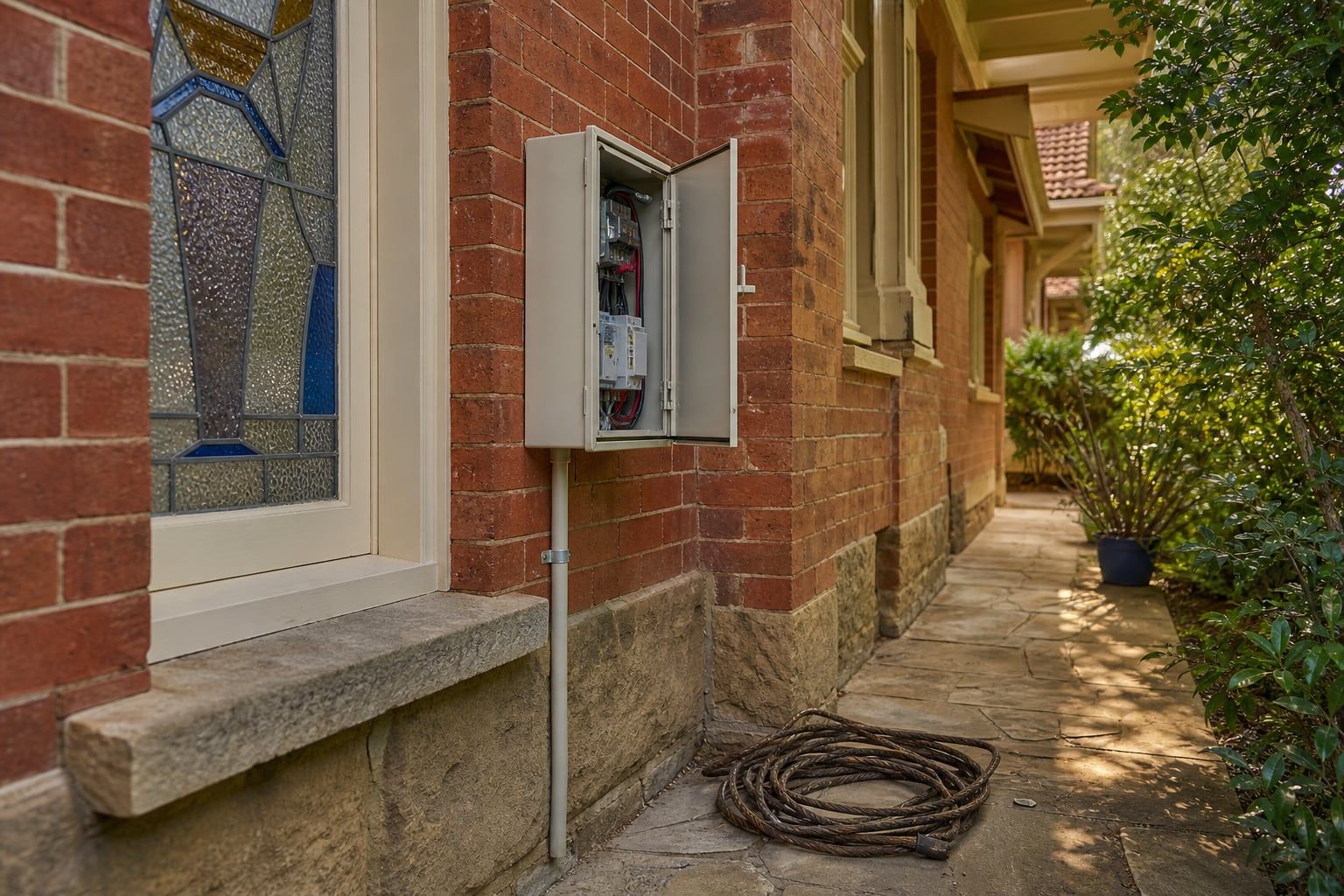
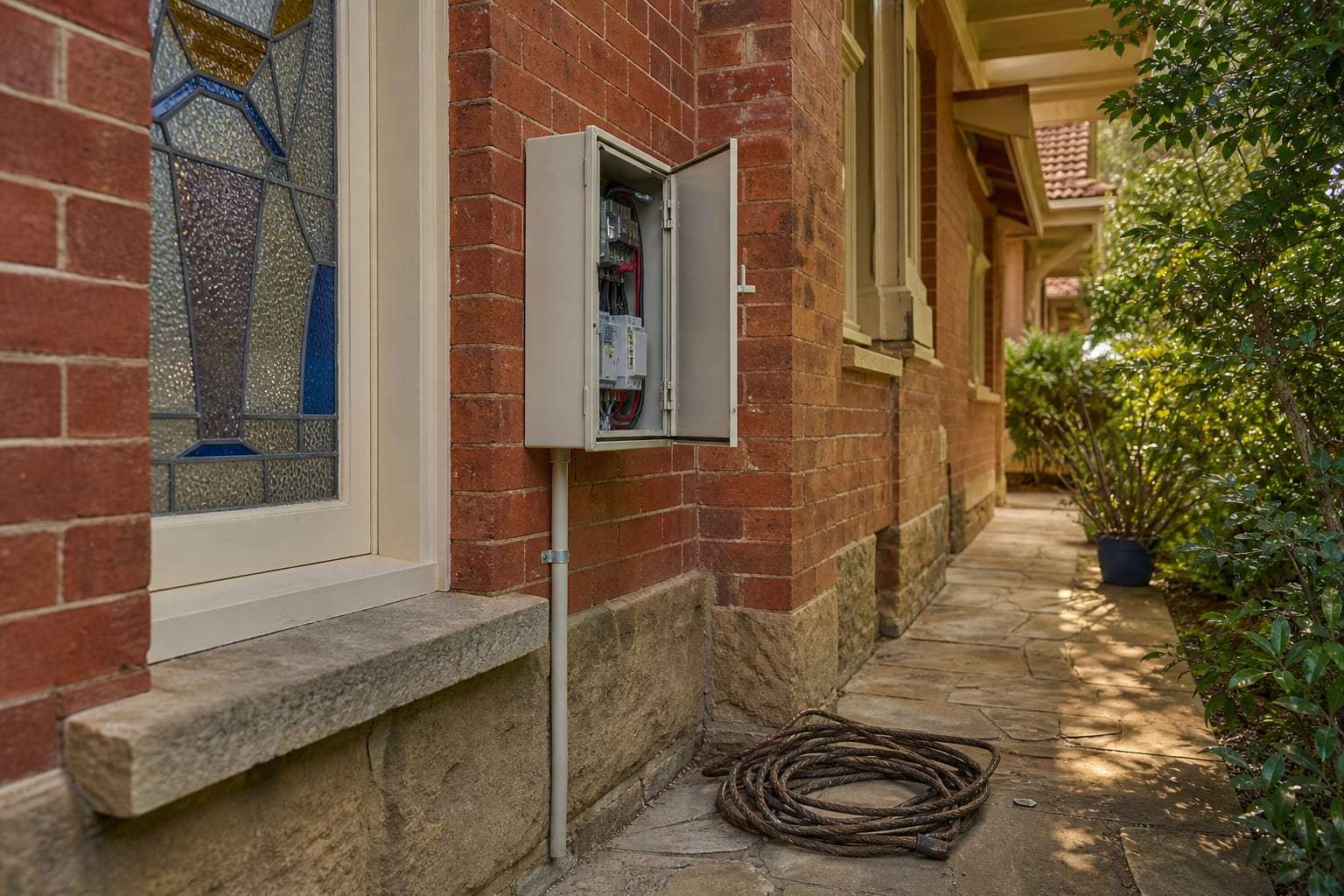
Paint to match. Where conduit has to show, paint it to match the wall.
Keep records. Note what was changed for future owners and heritage advisers.
The upgrade options
New consumer mains
A consumer mains upgrade replaces the old cable with properly sized mains, run along the most discreet practical route. It’s the core of most heritage upgrades.
A new or relocated attachment
If the bracket or raiser is failing or sits prominently on the facade, a point of attachment upgrade replaces it and, where the rules allow, moves it somewhere less visible.
Underground supply
An overhead to underground conversion removes the overhead line and bracket from view altogether. For many period homes it’s the most sympathetic option.
Three phase
If you’re going fully electric in a large home, a three phase power upgrade may be needed. The same discreet routing principles apply.
The meter board
Many period homes have the meter board on the front verandah or in the entry. Moving it can improve the presentation and give room for a modern board, but it involves the mains route, access rules and sometimes heritage considerations. Discuss it at the planning stage.
Heritage conservation areas
Ku-ring-gai, Willoughby and North Sydney councils have extensive heritage conservation areas. Work inside the property, and on side and rear walls not visible from the street, is usually straightforward. Visible changes to a listed or contributory facade may need checking with council. We’ll tell you if anything we propose might need it.
Working with your other trades
A heritage upgrade often runs alongside restoration work: re-roofing in slate or terracotta, repointing, joinery repairs. Coordinate the electrical supply work with those trades, so the roof is only opened once and new fittings go back into restored fabric.
A suggested sequence
- Supply inspection and load assessment
- Decide on mains upgrade, attachment move, undergrounding or three phase
- Plan routes with you and any heritage adviser
- Coordinate with roofers or restorers
- Ausgrid notification lodged
- Work done in a single day where possible
- Certificate of compliance and a record of the changes
Lighting, switches and the rest
A supply upgrade covers the network side up to the meter board. Your electrician handles the switchboard, circuits, lighting and switches inside the house, ideally with the same care for original fabric. Plan both together so walls and ceilings are opened once.
Insurance and sale
Insurers and buyers increasingly ask about old wiring and supplies. A recent certificate of compliance for new mains and a sound attachment answers those questions before they’re asked, and adds to the house’s records alongside any heritage documentation.
Talk to us
Call the level 2 electrician North Shore team. Our guide to undergrounding power covers the most popular option for period homes in detail.
Updated
Heritage home power upgrade on the North Shore: common questions
Something else on your mind? Call 02 9158 9919 and ask.
Do we need heritage approval to upgrade our supply?
Usually not for work inside the property or on non-visible walls. Visible changes to a heritage-listed facade may need checking with council. We'll tell you if anything we propose might.
Can the meter box be moved off the front verandah?
Often, though it depends on access requirements and the house. It's worth discussing with us and, if needed, your heritage adviser.
Will an upgrade damage original plaster or joinery?
We plan routes to avoid original fabric, using roof spaces, sub-floors and secondary walls.